AI’s Energy Appetite
The New ESG Challenge for Tech
Reading Time
5 min
Article Sections
6
Share Links
3
On This Page
Article Section
Introduction
In the year ending March 2026, Microsoft, Amazon and Google collectively emitted 119 million tonnes of carbon dioxide equivalent, almost a fifth more than the year before, a combined footprint roughly equivalent to a third of France's annual emissions.
The increase is not a one-off. United Nations data show operational emissions across the world's leading AI-focused tech companies rose an average of 150% between 2020 and 2023, and the trend has continued as AI infrastructure buildout accelerates rather than slows. Alphabet's own emissions have risen 51% since it pledged in 2020 to halve emissions and run entirely on carbon-free energy by 2030.
For companies that built entire sustainability brands on climate leadership, AI's energy appetite is no longer a footnote to their ESG story. It has become the story, and the shift is arriving faster than the targets these companies set in 2019 and 2020 were designed to absorb.
Article Section
Commitments Made Before the AI Buildout
Microsoft, Amazon, Google and Meta each committed to ambitious climate targets before generative AI reshaped their businesses: Microsoft to be carbon negative by 2030, Amazon to reach net zero by 2040 through its Climate Pledge, and Alphabet to run on 24/7 carbon-free energy across all its operations by the same year. These commitments were calibrated against a data center growth trajectory that generative AI has since overtaken.
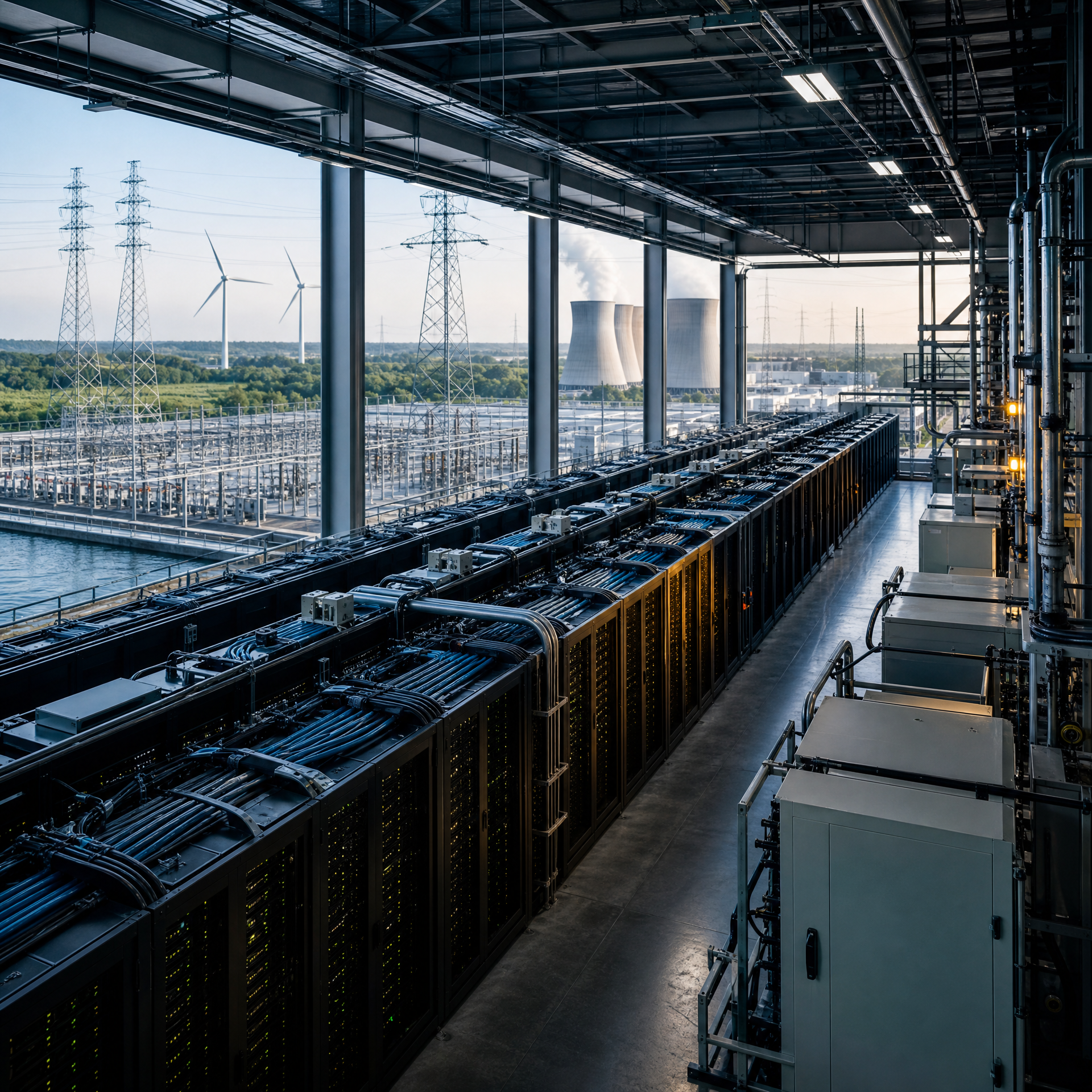
The International Energy Agency now projects global data center electricity demand could reach 945 TWh by 2030, more than Japan's entire annual electricity consumption, driven overwhelmingly by AI training and inference workloads rather than the cloud computing growth these targets originally anticipated.
This gap between commitment and consumption is now showing up directly in reported numbers. Microsoft's total emissions rose 25% year-over-year in its 2025 fiscal year, which the company attributed primarily to data center expansion, and Amazon reported a 16% rise in total emissions, with supply chain emissions, including data center construction, up 20%.
Article Section
Why This Is Becoming an ESG Problem, Not Just an Energy One?
The Targets Were Set Before the AI Buildout Existed
Corporate net-zero targets set in 2019 and 2020 assumed a growth curve for computing demand that generative AI has since made obsolete. Data center capital expenditure guidance has doubled year-on-year at some hyperscalers, and the emissions trajectory is following the capital, not the other way around.
Better Accounting Is Making the Problem More Visible, Not Just Bigger
Microsoft's Scope 2 emissions rose from 2% to 13% of its total reported footprint in FY2025, not because its electricity use suddenly changed, but because it stopped counting unbundled renewable energy certificates, credits not tied to a specific new renewable project, toward its clean energy claims. The company's real electricity-related footprint was always closer to the higher number. Tighter accounting simply removed the instrument that had been masking it.
Emissions Are Only Part of the Picture
Investor scrutiny is expanding beyond carbon. Trillium Asset Management filed a shareholder resolution pressing Alphabet on its water and energy disclosure as data center expansion accelerates, and similar pressure is building on Amazon and Microsoft. Water consumption, land use and grid strain are becoming material disclosure items in their own right, not secondary details attached to a carbon footprint story.
The Industry's Own Framing Complicates the Picture
Tech companies are simultaneously arguing that AI is a net positive for climate action. Google has pointed to its AI tools helping reduce emissions elsewhere by an estimated 41 million tonnes of CO2 last year, even as its own operational footprint grows. That argument may hold some truth, but it does not resolve the more immediate accountability question: whether a company's direct emissions growth is compatible with the net-zero date it has publicly committed to.
Article Section
What This Means Going Forward?
What Investors Are Now Actually Asking For?
Shareholder resolutions like Trillium's are asking for disclosure specificity, facility-level water and energy data, not renewed pledges. That is a different, harder ask than the target-setting exercises companies were previously accustomed to.
Why Nuclear and SMR Deals Signal a Structural Shift?
Amazon's investment in small modular nuclear reactors and its purchase of a data center co-located with an existing nuclear plant are not sustainability marketing. They reflect a recognition that unbundled RECs and market-based accounting tricks are losing credibility, and that only additional, dispatchable clean power can support AI-scale load growth.
What a Credible Climate Commitment Will Now Require?
Going forward, credibility will depend on transparent Scope 2 accounting that reflects additional and time-matched clean energy rather than unbundled instruments, alongside water and land-use disclosure at the facility level, the kind of granularity Microsoft's FY2025 report has already begun to reveal.
Article Section
Conclusion
The gap between the climate commitments tech companies made in 2019 and 2020 and the emissions reality of their 2026 AI infrastructure buildout is no longer a rounding error. It is now large enough, and visible enough, that investors are treating it as a distinct risk category.
Whether the sector's response is genuine accounting reform, following Microsoft's lead in removing non-additional instruments from its claims, or a retreat toward softer disclosure, will determine whether AI's energy appetite becomes a managed transition or a credibility crisis for corporate climate commitments broadly.
Article Section
Frequently Asked Questions
How much did Microsoft, Amazon and Google's emissions rise in the year to March 2026?
Their combined emissions reached 119 million tCO2e, up almost a fifth from the previous year, driven largely by AI data center expansion.
Why did Microsoft's Scope 2 emissions share jump from 2% to 13%?
Because it stopped counting unbundled renewable energy certificates, which are not tied to a specific new renewable project, toward its clean energy claims in FY2025.
What is driving investor pressure on Alphabet specifically?
Trillium Asset Management filed a shareholder resolution pressing Alphabet on water and energy disclosure as its emissions have risen 51% since its 2020 carbon-free pledge.
How large could data center electricity demand become by 2030?
The IEA projects it could reach 945 TWh, more than Japan's entire annual electricity consumption.
What would make a tech company's climate commitment credible going forward?
Transparent Scope 2 accounting based on additional, time-matched clean energy rather than unbundled certificates, plus facility-level water and land-use disclosure.
Keep Reading
Related Blogs

Technology & Data Centers / Energy
Structuring a Renewable Power Purchase Agreement in India
What Businesses Need to Know?
Read more
Technology & Data Centers / Carbon
Carbon Intensity vs Absolute Emissions
Why the Metric You Choose Changes Your ESG Story Completely?
Read more
Technology & Data Centers / Scope 3
State of Carbon Disclosure in India 2026
Scope 3 Depth Lags Far Behind Headline Reporting Rates
Read moreNext Step
Ready to turn ESG complexity into strategic advantage?
Talk to ESG Astraa about disclosures, climate strategy, governance controls, and execution support for your team.