Data Centre E-Waste
What Happens to AI Servers and Chips at End of Life?
Reading Time
4 min
Article Sections
5
Share Links
3
On This Page
Article Section
Before You Begin
End-of-life handling follows a hierarchy. Reuse means redeploying equipment inside the organisation. Repair fixes faults, and refurbishment prepares equipment for a second owner. Recovery extracts metals and other materials from what cannot be reused, and disposal is the last resort for what remains.
You will need an up-to-date asset register, a data classification policy, a list of candidate partners and a plan for hazardous items. In India, the E-Waste (Management) Rules, 2022 apply. They are built on Extended Producer Responsibility (EPR), which makes producers responsible for the waste from what they sell, and they place duties on large users, known as bulk consumers, to hand equipment only to registered partners.
Article Section
Step-by-Step: Managing Data Centre E-Waste Responsibly
Step 1: Take stock of every asset
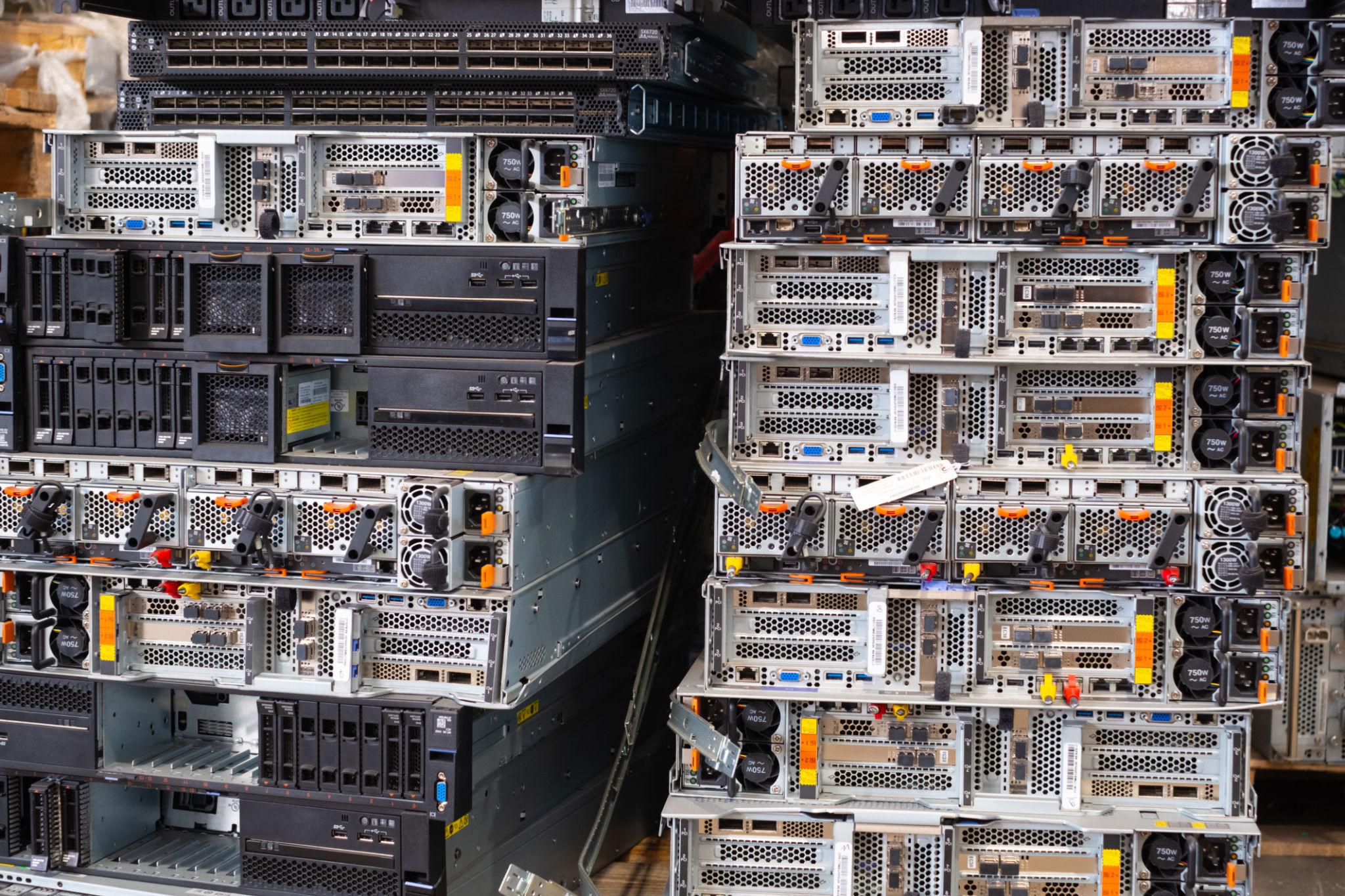
List servers, GPUs, storage drives, networking gear, UPS units and batteries, cooling parts and cables, with serial numbers, age and condition. Mark which items stored data. You cannot reuse, track or report what you have not counted.
Step 2: Follow the hierarchy
Ask in order: can it be redeployed, repaired, refurbished for resale or donation, or only recycled? Reuse keeps embedded materials and energy in service. In its aggressive adoption scenario, the Nature Computational Science study estimates that extending AI server life by one year could avoid about 2.8 million tonnes of e-waste.
Step 3: Erase data before hardware leaves
Wipe drives to a recognised standard such as NIST SP 800-88, verify the result and keep certificates by serial number. Where erasure cannot be verified, destroy the drive physically. Skipping this step turns a recycling partner into a data risk.
Step 4: Choose authorised partners
In India, check that recyclers and refurbishers are registered on the CPCB EPR portal, since bulk consumers are expected to hand over e-waste only to registered entities. Ask for registration details and review an audit or site visit.
Step 5: Handle hazardous parts separately
Batteries, refrigerants and circuit boards need specialist handling and fall under separate rules. Keep them apart from general equipment and ask partners how each is treated.
Step 6: Keep a chain of custody
Record who collected which serial numbers, when, and where they went, and keep handover documents and recycling certificates. These records prove compliant disposal.
Step 7: Review and report
Total the quantities reused, refurbished, recycled and disposed of each year, and use them for waste disclosures such as BRSR. Look for any item that left the chain.
Article Section
Tips, Mistakes and Troubleshooting
Mistake: assuming recycled means responsibly recycled
Only 22.3% of global e-waste in 2022 was documented as properly collected and recycled, so ask for proof, not promises.
Mistake: skipping erasure verification
A wipe that was never checked is a data leak waiting to happen. Verify and certify each drive.
Tip: extend life where it is safe
Redeploying GPUs and servers to less demanding workloads before retirement delays disposal and avoids early waste.
Troubleshooting: the partner cannot show registration or certificates
Do not hand over equipment. Ask for CPCB registration details and recycling certificates, and switch partners if they cannot provide them.
After you finish: reconcile records
Match your asset register to certificates once a year to confirm every serial number is accounted for.
Article Section
Conclusion
Responsible end-of-life handling follows a clear order: count the assets, reuse before recycling, erase data, use registered partners, handle hazardous parts separately and keep records.
Start with an accurate asset register, because every later step depends on it. Then work through reuse, erasure, registered partners and records in order, so nothing leaves the site unaccounted for.
Article Section
Frequently Asked Questions
What happens to old data centre servers, and how is AI hardware recycled?
They are redeployed, repaired and refurbished where possible, and otherwise sent to registered recyclers who recover metals and other materials.
Can GPUs and servers be refurbished, and is reuse better than recycling?
Yes, and reuse generally comes first because it keeps equipment in service longer, with recycling for what cannot be reused.
How should data centres destroy data before recycling hardware?
By wiping drives to a recognised standard and verifying the result, or physically destroying them where verification is not possible, with certificates kept by serial number.
What is India's e-waste compliance framework?
The E-Waste (Management) Rules, 2022 run on extended producer responsibility, with recyclers and refurbishers registered on the CPCB portal and bulk consumers required to use registered entities.
Which data centre components are hazardous?
Batteries, refrigerants and circuit boards need specialist handling under separate rules.
Keep Reading
Related Blogs
All Industries
Extended Producer Responsibility (EPR)
A Global Explainer for Manufacturers
Read more
Manufacturing
Circular Economy KPIs Every Indian Manufacturer Should Be Tracking, And Disclosing
A practical breakdown of the material, water, and end-of-life metrics that make circularity claims disclosure-ready.
Read more
Manufacturing
The EU Battery Regulation Explained
What It Means for Manufacturers Worldwide?
Read moreNext Step
Ready to turn ESG complexity into strategic advantage?
Talk to ESG Astraa about disclosures, climate strategy, governance controls, and execution support for your team.