Kajaria Ceramics' Fuel-Diversification Programme
Turning a gas-cost shock into a biomass-fuel and efficiency programme
Summary
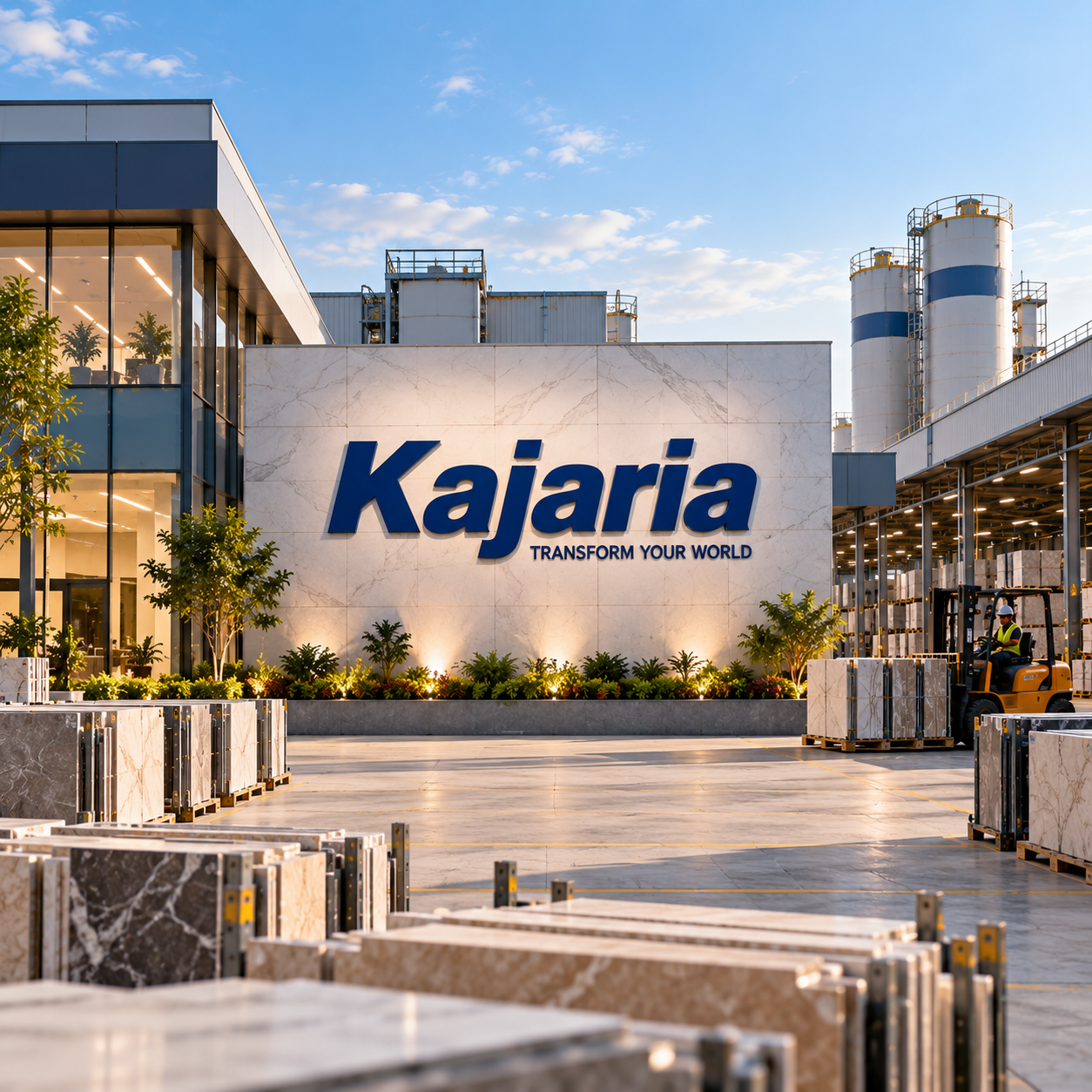
Kajaria Ceramics' tile kilns and spray dryers run on high-temperature fuels. When gas supply was cut and fuel costs rose sharply in FY2022-23, consolidated EBITDA margin fell to 12.20% in Q3 FY23 from 17.21% a year earlier.
Kajaria introduced alternative fuels in December 2022, with mustard-husk biomass as the principal fuel at its Gailpur and Sikandrabad plants in North India, where as coal use was restricted. It paired the switch with kiln modernisation, solar and energy-efficiency measures.
Alternate-fuel share rose from about 11-12% in December 2022 to around 24% in January 2023. In FY2025-26, Scope 1 emissions fell 5.1% year on year to 414,938 tCO₂e, and total energy consumption fell 4.8% to 8,534,536 GJ.
The disclosures do not show that biomass alone drove the reduction. Production volumes, product mix, kiln efficiency, gas prices and renewable electricity also affect the outcome, and the sources reviewed give no company-wide biomass share for FY2025-26.
Full Case Study
Read the complete methodology, results and roadmap in the PDF.
Keep Reading
Related Case Studies
IT Services
From Commitment to Climate Leadership
How Infosys Achieved Carbon Neutrality - 30 Years Ahead of the Paris Agreement
Read more
Logistics
First Mover, Hardest Route
How A.P. Moller-Maersk Is Decarbonising the Industry That Moves the World, Before the World Is Ready for It
Read more
Chemicals
The 850°C Challenge
How BASF SE is redesigning high-heat chemistry for a net-zero future
Read moreNext Step
Ready to turn ESG complexity into strategic advantage?
Talk to ESG Astraa about disclosures, climate strategy, governance controls, and execution support for your team.