Community Backlash Against Data Centres
Article 2 min read
The social risk many companies underestimate.
By ESG Astraa Advisory Team
In brief
Community opposition to data centres is mostly a dispute about who carries the local costs and who can check the claims. It is not a rejection of technology. In the cases reviewed here, opposition often intensified when ownership, resource use or the basis for commitments was unclear.
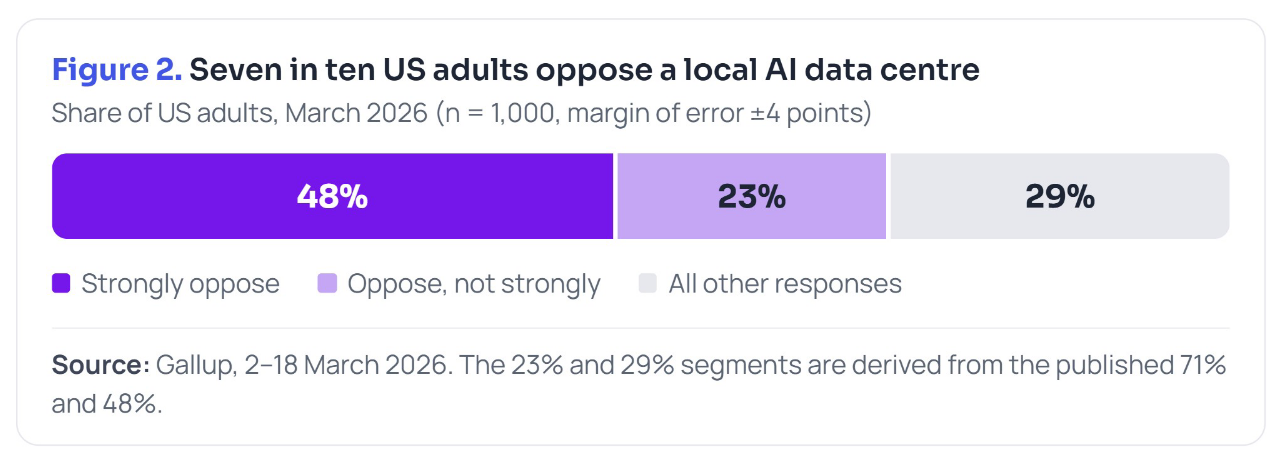
- of US adults oppose an AI data centre in their local area
- 71%
- worth about $130 billion blocked or delayed in the US in Q1 2026
- 75 projects
- in 46 US AI data centre projects cancelled, stalled or withdrawn after opposition
- $170B+
In this article
- How large has the backlash become?
- Why do communities push back?
- Why does transparency seem to set the speed of opposition?
- What does the pressure look like by concern?
- How can companies manage social licence? Five steps
- Where is policy heading?
- Social licence is built before the permit, not after the protest
- Frequently asked questions
How large has the backlash become?
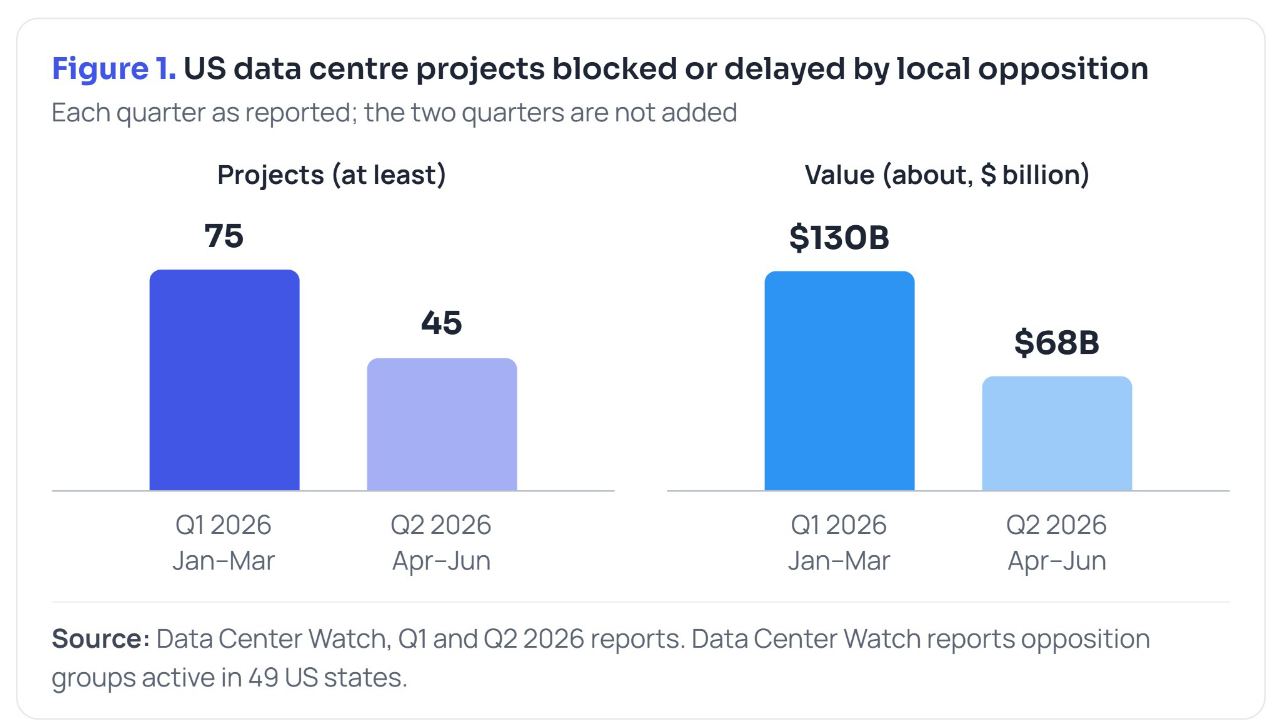
In the United States, Data Center Watch, a research initiative that tracks local disputes, recorded at least 75 projects worth about $130 billion blocked or delayed by local opposition in the first quarter of 2026, the largest single-quarter concentration it has recorded. In the second quarter the count was at least 45 projects worth about $68 billion. Data Center Watch reports each quarter separately and does not publish a half-year total, so this article does not add them. The figures combine blocked and delayed projects, so they measure disruption, not investment lost.
Exhibit 1
View the data
| Quarter | Projects (at least) | Value (about, $ billion) |
|---|---|---|
| Q1 2026 Jan–Mar | 75 | $130B |
| Q2 2026 Apr–Jun | 45 | $68B |
Exhibit 2
View the data
| Response | Share of US adults |
|---|---|
| Strongly oppose | 48% |
| Oppose, not strongly | 23% |
| All other responses | 29% |
Exhibit 3
View the data
| Reason | Share of opponents |
|---|---|
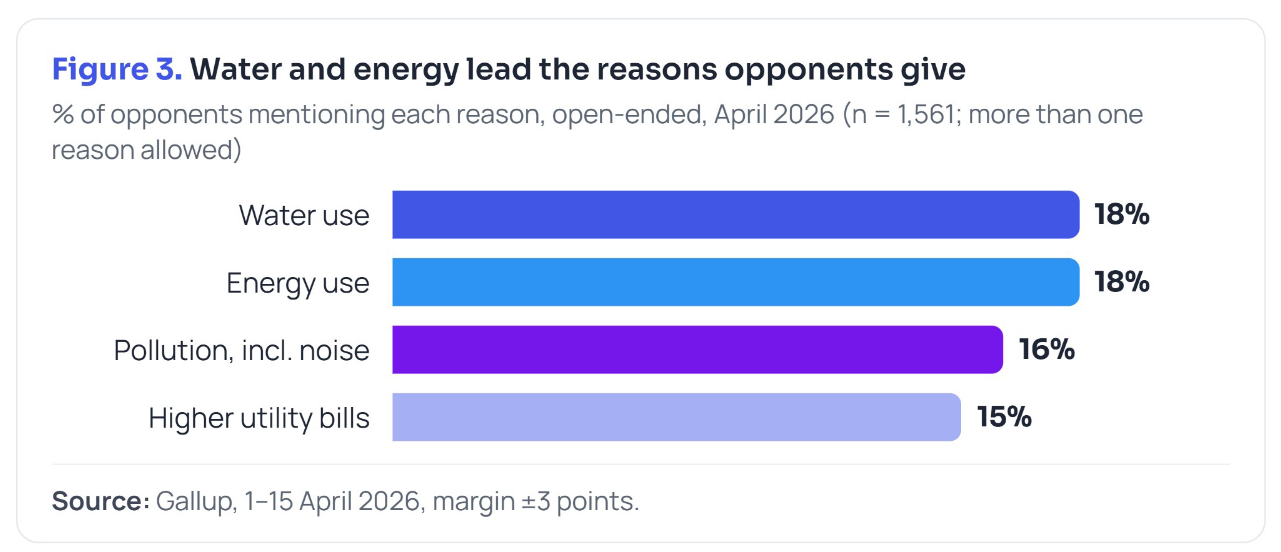
| Water use | 18% |
| Energy use | 18% |
| Pollution, incl. noise | 16% |
| Higher utility bills | 15% |
Why do communities push back?
A data centre concentrates several demands in one place: electricity at grid scale, land, water where cooling uses it, and round-the-clock noise from cooling and backup equipment. The benefits, such as tax revenue and investment, are spread more widely or arrive later. Residents compare their own exposure with a benefit they may never see. That comparison is reasonable, and the trade-off is real on both sides: Gallup found supporters mostly cite jobs and economic benefits.
Exhibit 4
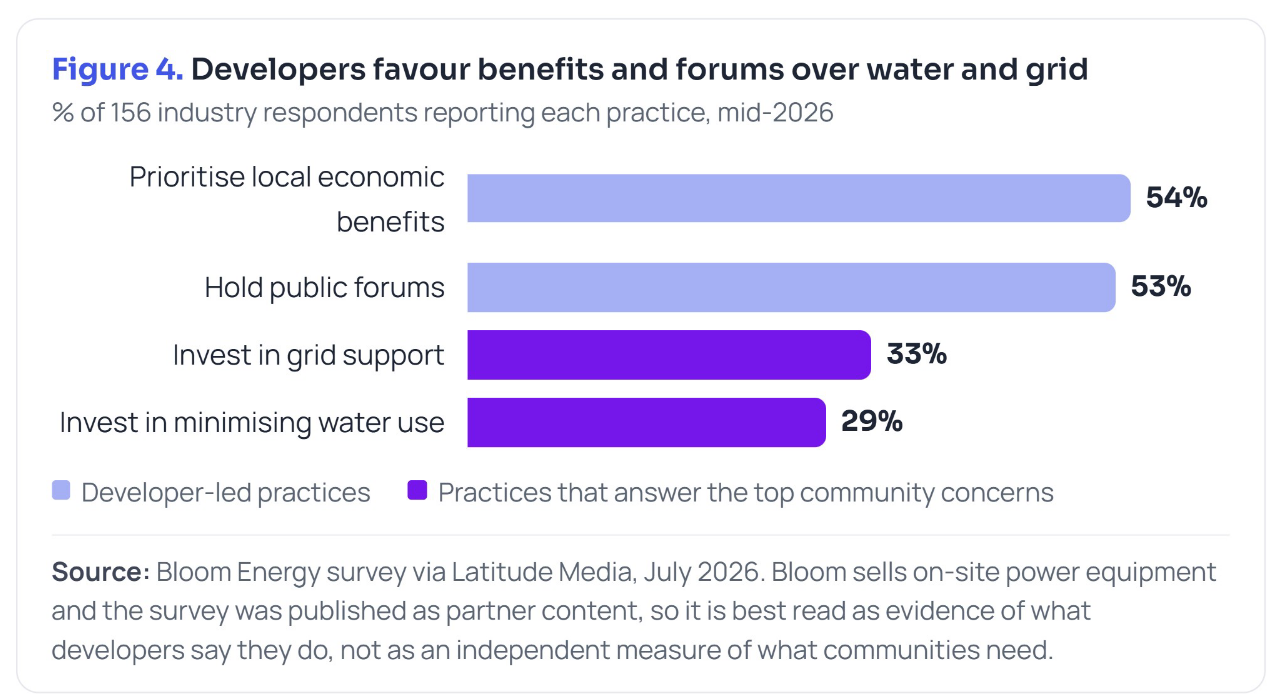
View the data
| Practice | Share of respondents |
|---|---|
| Prioritise local economic benefits | 54% |
| Hold public forums | 53% |
| Invest in grid support | 33% |
| Invest in minimising water use | 29% |
Why does transparency seem to set the speed of opposition?
Relae (formerly Carbon Direct) documented 46 US AI data centre projects in 20 states that were cancelled, stalled or withdrawn after community opposition between January 2024 and May 2026. Together they represent more than $170 billion in announced investment, with values known for 35 of the 46. In the seven cases it studied in depth, process and transparency concerns were the most consistently cited factors.
Exhibit 5
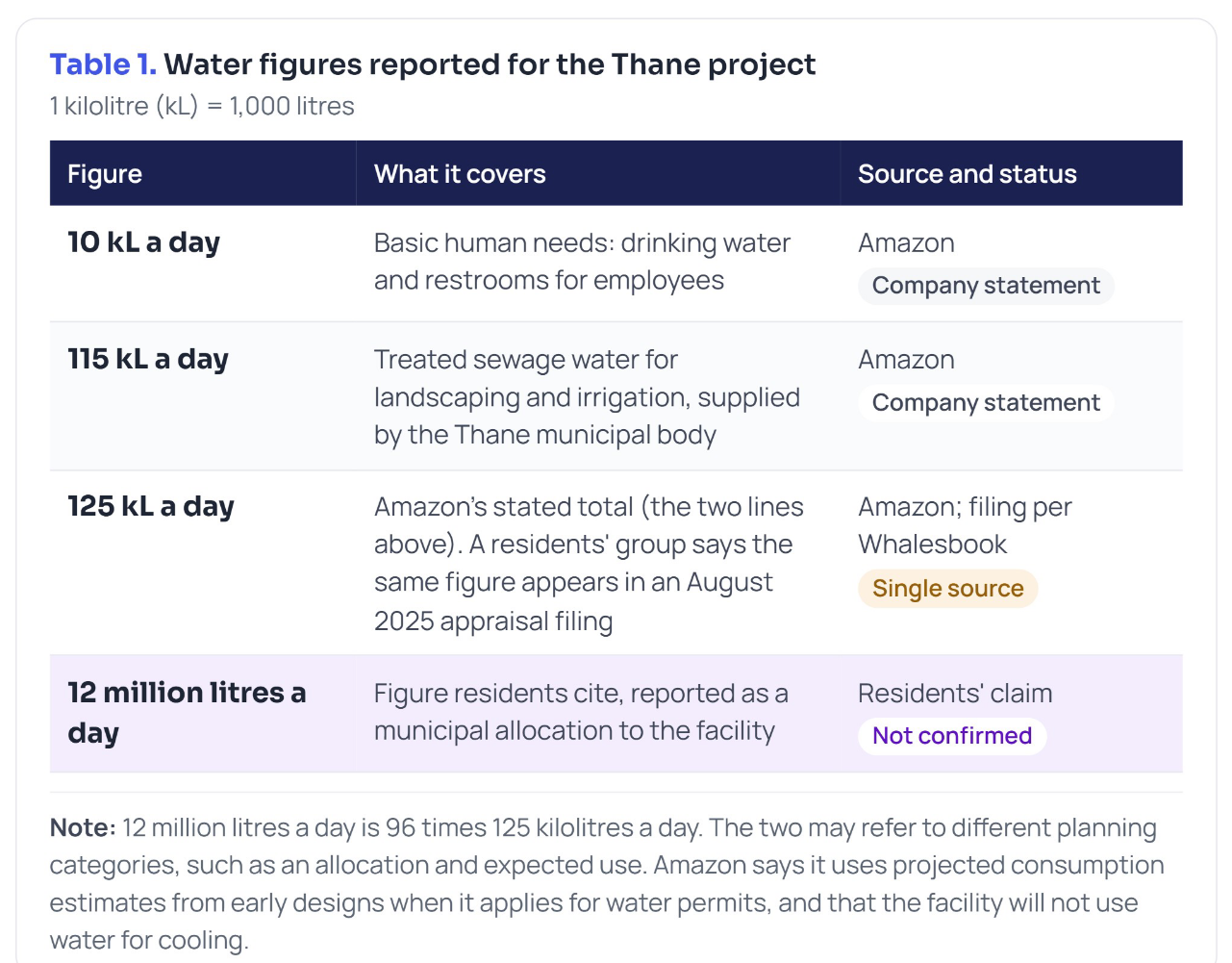
View the data
| Figure | What it covers | Source and status |
|---|---|---|
| 10 kL a day | Basic human needs: drinking water and restrooms for employees | Amazon Company statement |
| 115 kL a day | Treated sewage water for landscaping and irrigation, supplied by the Thane municipal body | Amazon Company statement |
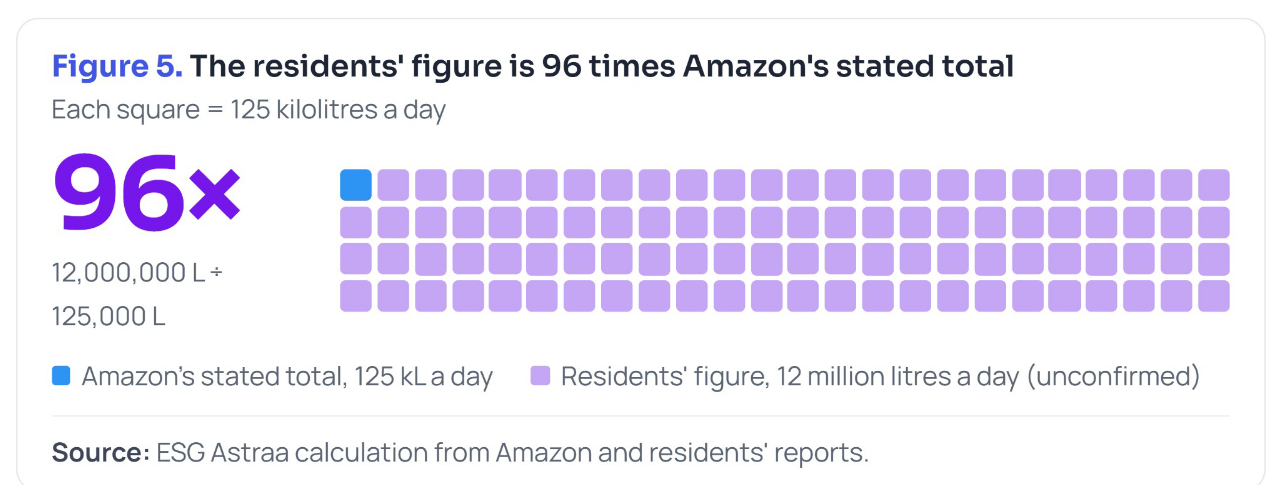
| 125 kL a day | Amazon's stated total (the two lines above). A residents' group says the same figure appears in an August 2025 appraisal filing | Amazon; filing per Whalesbook Single source |
| 12 million litres a day | Figure residents cite, reported as a municipal allocation to the facility | Residents' claim Not confirmed |
Exhibit 6
What does the pressure look like by concern?
Table 2 shows where each concern has surfaced in recent disputes and what residents want to see. These are simplified snapshots, not complete pictures.
Exhibit 7
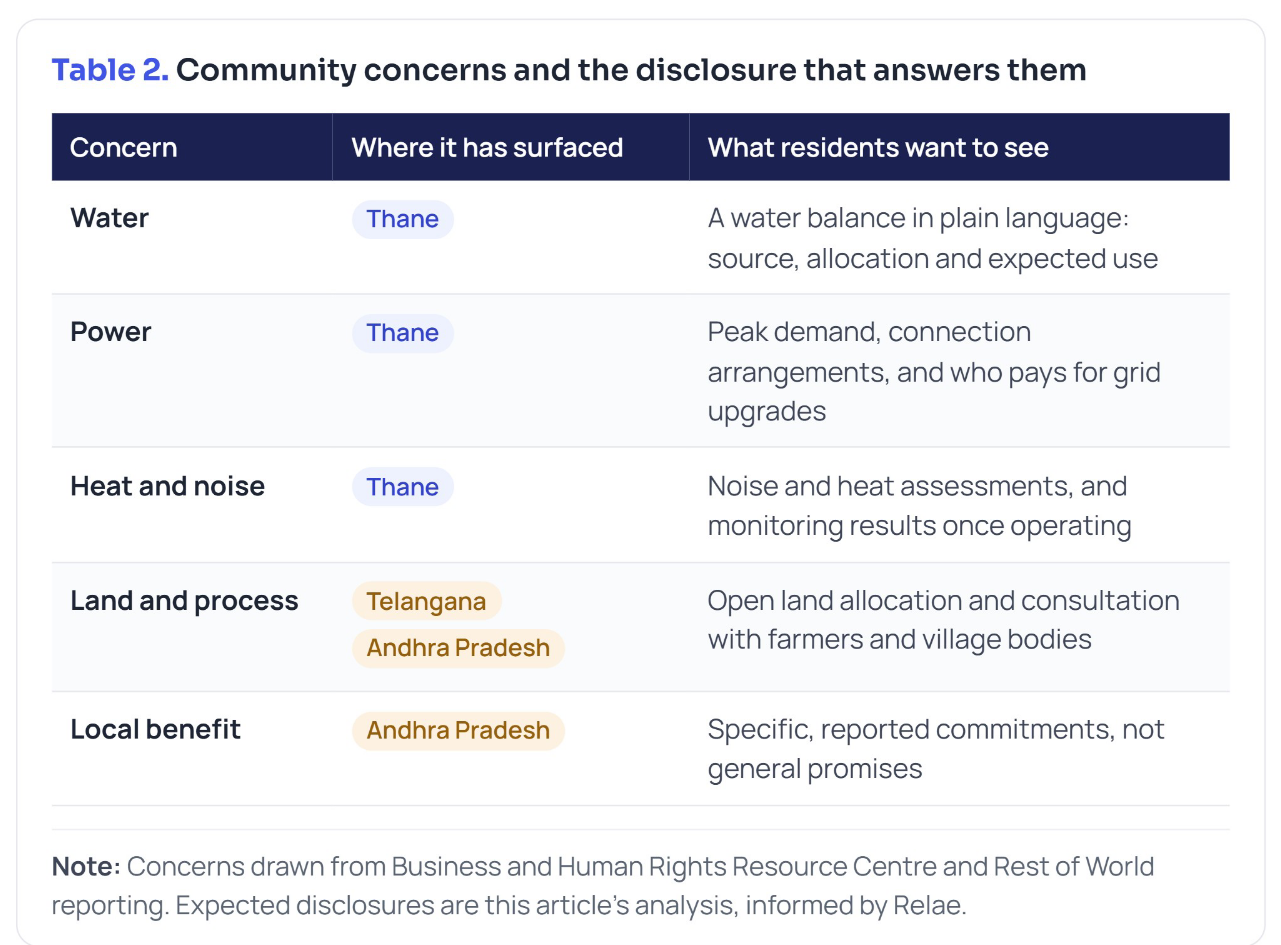
View the data
| Concern | Where it has surfaced | What residents want to see |
|---|---|---|
| Water | Thane | A water balance in plain language: source, allocation and expected use |
| Power | Thane | Peak demand, connection arrangements, and who pays for grid upgrades |
| Heat and noise | Thane | Noise and heat assessments, and monitoring results once operating |
| Land and process | Telangana Andhra Pradesh | Open land allocation and consultation with farmers and village bodies |
| Local benefit | Andhra Pradesh | Specific, reported commitments, not general promises |
Where is policy heading?
Exhibit 8
Where is policy heading?
1 Feb 2026
INDIA · UNION BUDGET
2026 session
UNITED STATES · STATEHOUSES
July 2026
UNITED STATES · NEW YORK
6 Aug 2026
INDIA · ENVIRONMENT MINISTRY
ESG Astraa
Exhibit 9
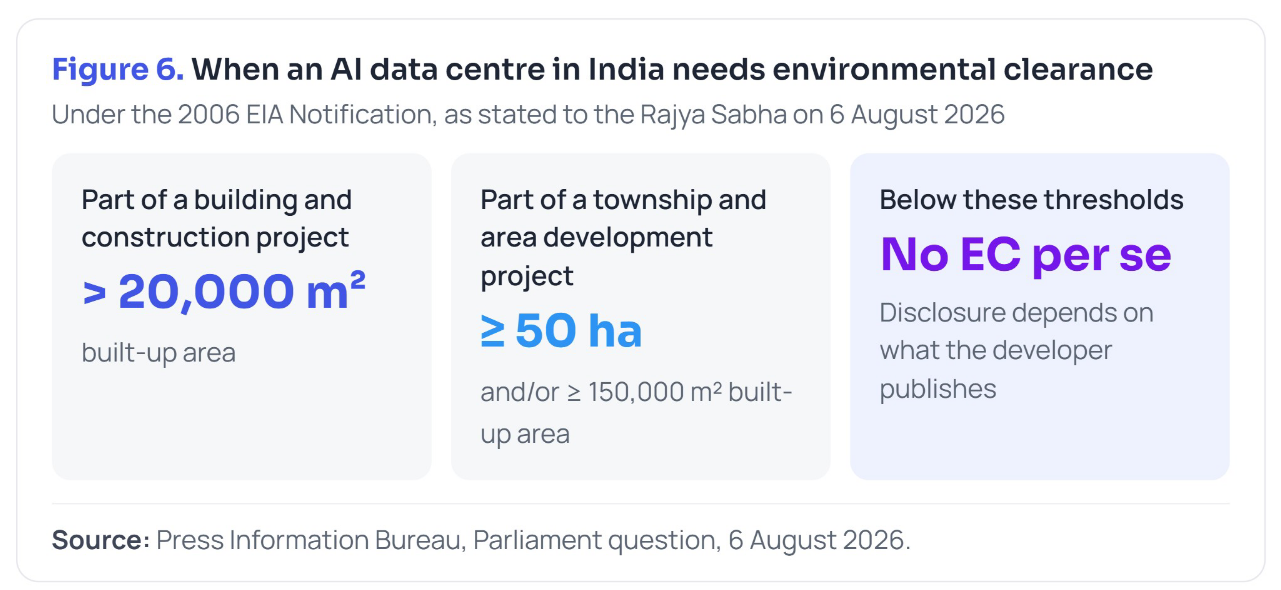
The implication is that how much residents learn about a project depends heavily on what the developer chooses to publish, especially for facilities below those thresholds. In the United States, where opposition has been loudest, states are already acting on siting, power and water, and New York has paused permits outright. Indian developers should not assume their rules will stay as they are.
Frequently asked questions
- Why do communities oppose local data centre projects?
- Opposition is primarily driven by concerns over grid-scale electricity usage, water consumption for cooling, round-the-clock noise, and land allocation. Disputes often escalate when ownership, resource claims, and environmental impact data are unclear or unverified.
- How significant is data centre opposition in the United States?
- Data Center Watch recorded at least 75 projects worth about $130 billion blocked or delayed by local opposition in Q1 2026 alone, with a Gallup poll revealing that 71% of US adults oppose local AI data centres.
- What steps can developers take to secure a social licence?
- Developers should engage local residents early before making site commitments, publish expected water, power, and noise figures alongside their assumptions, secure independent impact assessments, establish verifiable local benefit commitments, and run a formal grievance process.
Where ESG Astraa can help



About the author
ESG Astraa Advisory Team. ESG Astraa helps Indian companies collect ESG data, calculate emissions and file BRSR and other disclosures, with advisors alongside the software.
Social licence is built before the permit, not after the protest
This is not an argument against data centres. They bring real investment, and Gallup found supporters value the jobs and economic benefits. The argument is that, in the cases reviewed, local opposition has followed gaps in transparency and process closely, and those gaps can be closed at the siting stage.