
GRI 1, GRI 2 and GRI 3 Explained
Article 1 min read
What each Universal Standard covers, and how rules, context and material topics fit together in one report.
By ESG Astraa Advisory Team
In brief
Open the GRI Standards for the first time and you meet three "Universal" documents that all seem to apply to everything. New reporters often cannot tell where the rules end, where the organisational profile begins and where materiality starts.
- IN FORCE SINCE
- 1 JANUARY 2023
- organisational disclosures, from reporting practices to stakeholder engagement
- 30
In this article
What the GRI Universal Standards 2021 are
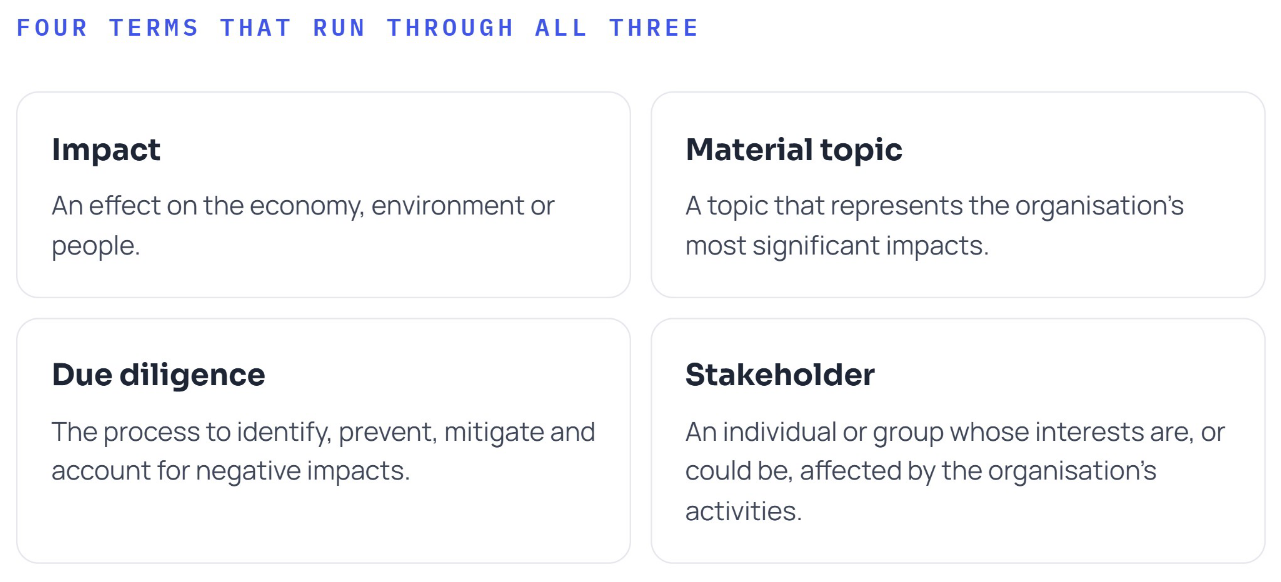
The GRI Standards are a modular set of sustainability reporting standards. They ask an organisation to report its impacts: the effects it has, or could have, on the economy, the environment and people, including on human rights.
Exhibit 1
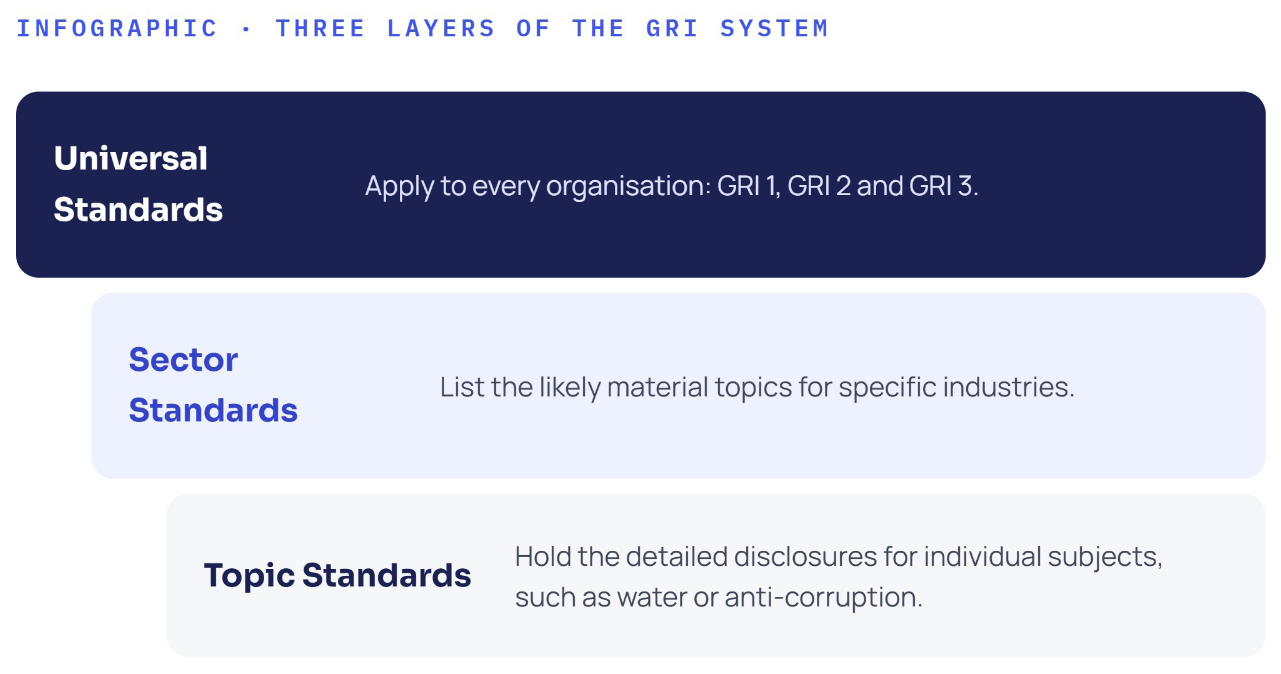
Exhibit 2
GRI 1: the rulebook
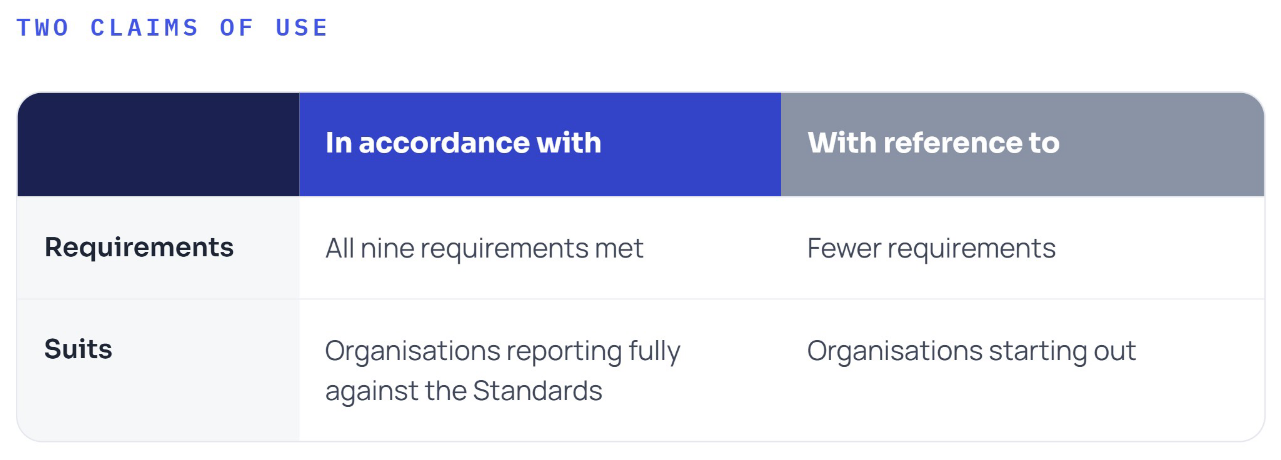
GRI 1 Foundation explains the purpose and system of the Standards and defines the key concepts. It contains no disclosures. Instead, it sets the requirements for reporting in accordance with the GRI Standards.
Exhibit 3
View the data
| In accordance with | With reference to | |
|---|---|---|
| Requirements | All nine requirements met | Fewer requirements |
| Suits | Organisations reporting fully against the Standards | Organisations starting out |
GRI 2: the organisational profile page
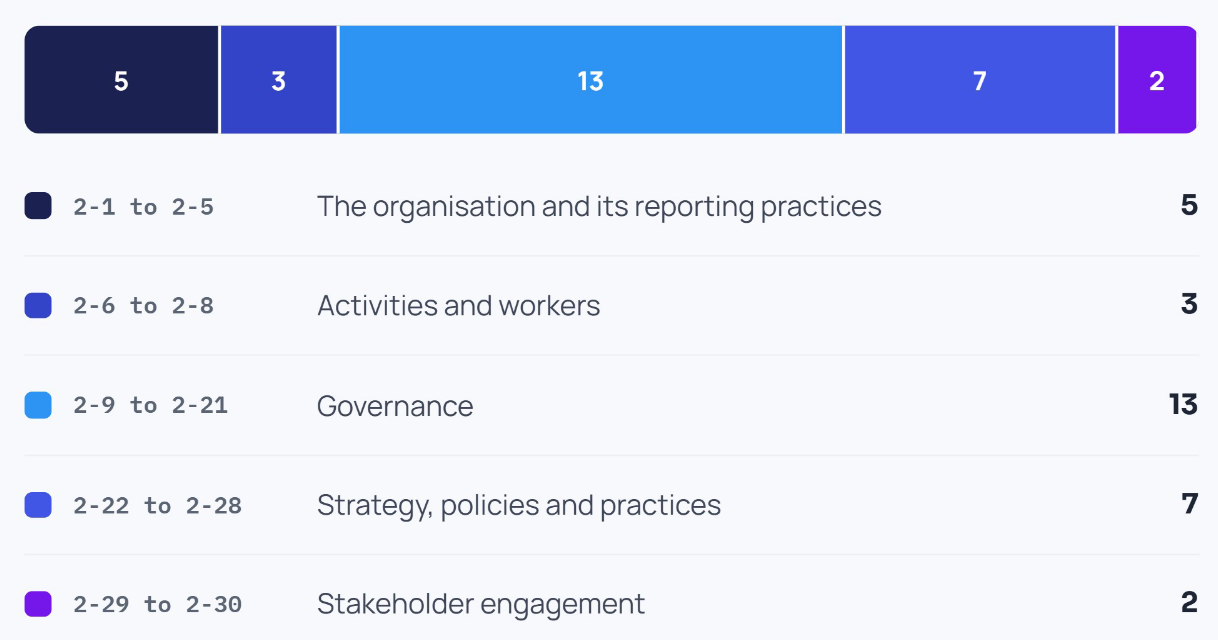
GRI 2 General Disclosures contains 30 disclosures in five groups. Every reporter must report all of them.
Exhibit 4
View the data
| Disclosures | Category | Count |
|---|---|---|
| 2-1 to 2-5 | The organisation and its reporting practices | 5 |
| 2-6 to 2-8 | Activities and workers | 3 |
| 2-9 to 2-21 | Governance | 13 |
| 2-22 to 2-28 | Strategy, policies and practices | 7 |
| 2-29 to 2-30 | Stakeholder engagement | 2 |
GRI 3: the meeting that sets the agenda
GRI 3 Material Topics gives a four-step process for deciding which topics to report. The steps are guidance, not separate requirements.
Exhibit 5
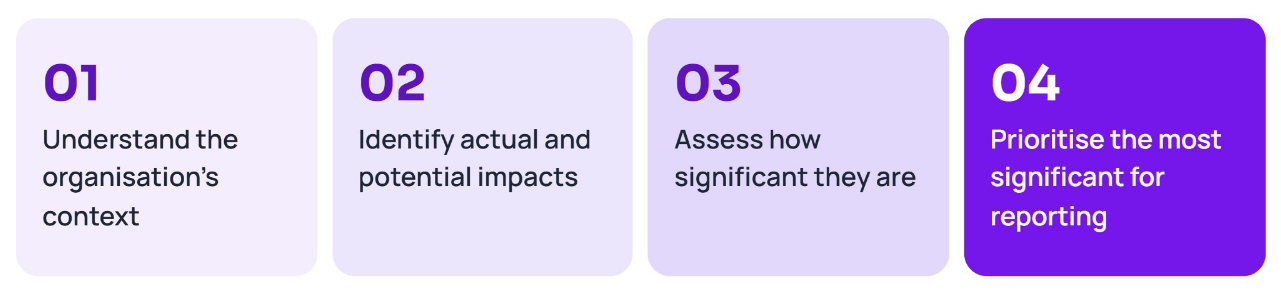
Exhibit 6

View the data
| Disclosure | Description | Omission Status |
|---|---|---|
| 3-1 | The process used to determine material topics | No omission |
| 3-2 | The list of material topics | No omission |
| 3-3 | How each material topic is managed | Omission permitted |
From impacts to a verifiable report
Exhibit 7
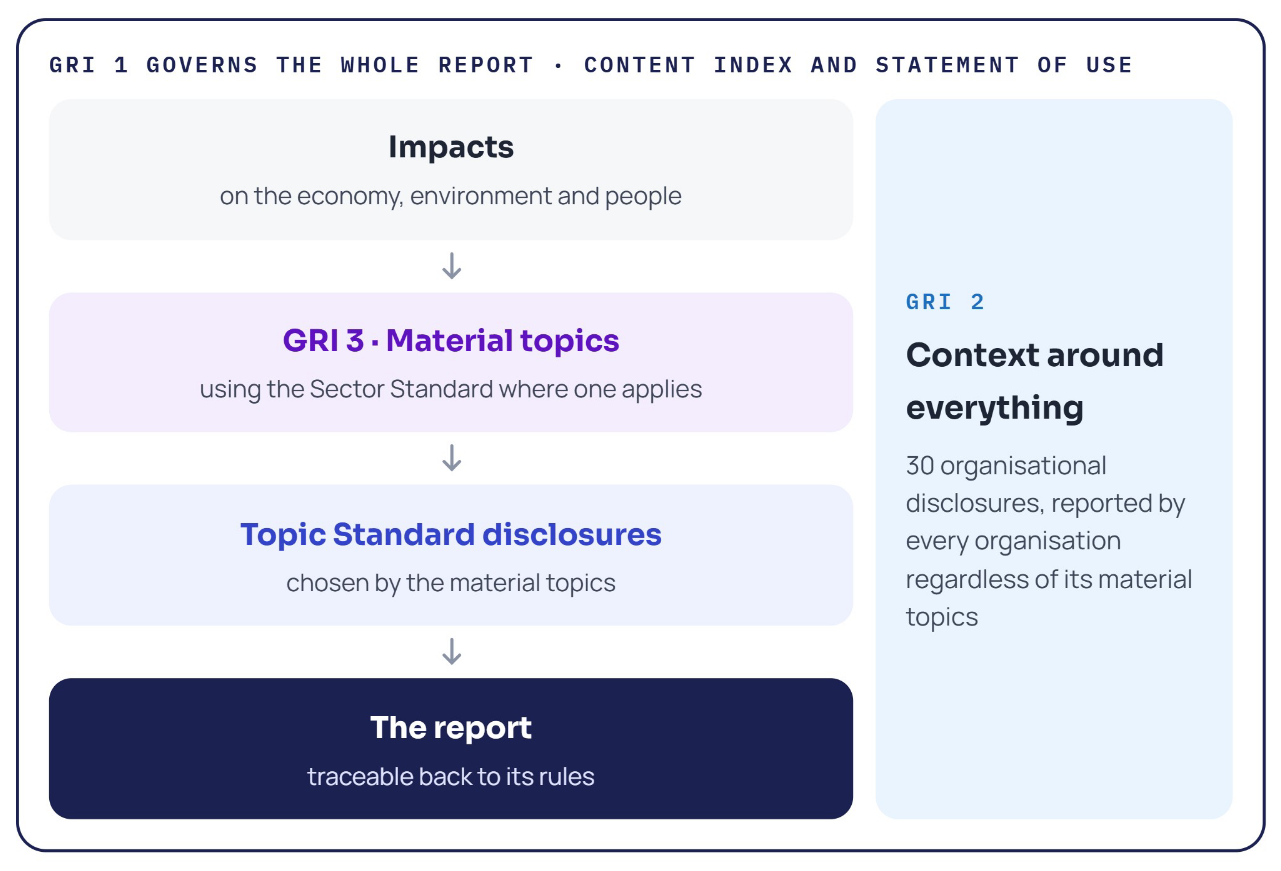
Exhibit 8
View the data
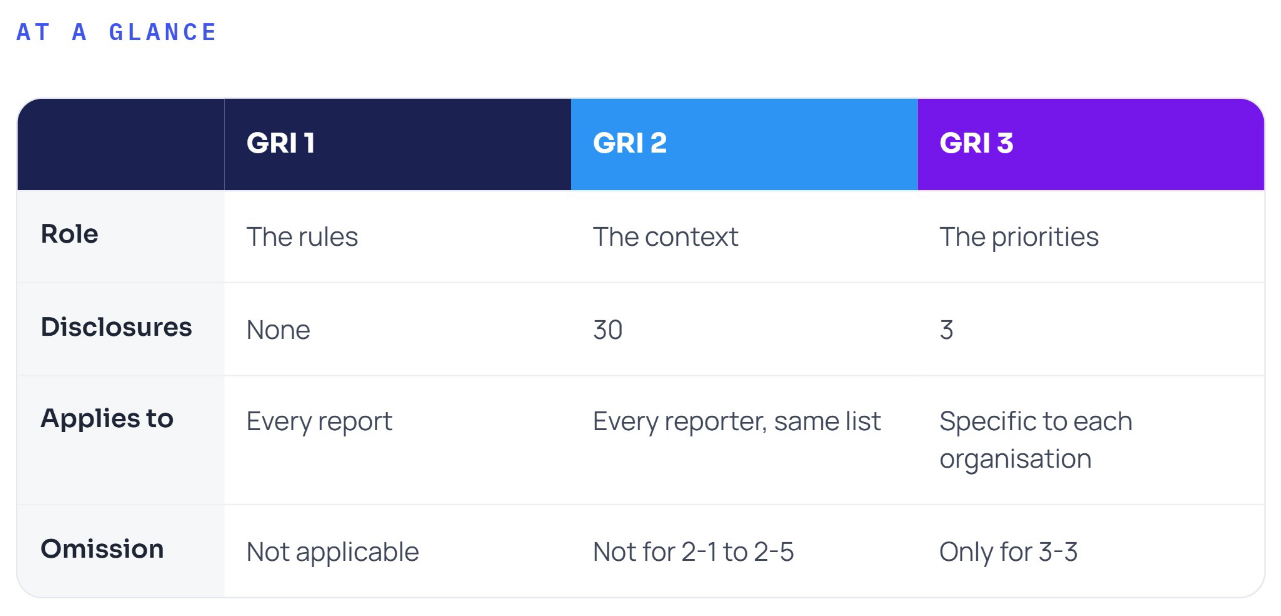
| Metric | GRI 1 | GRI 2 | GRI 3 |
|---|---|---|---|
| Role | The rules | The context | The priorities |
| Disclosures | None | 30 | 3 |
| Applies to | Every report | Every reporter, same list | Specific to each organisation |
| Omission | Not applicable | Not for 2-1 to 2-5 | Only for 3-3 |
How to apply GRI 1, GRI 2 and GRI 3
- 101 Check the GRI 1 requirements first
- 202 Keep context and materiality apart
- 303 Document the materiality process
- 404 Set the scope early
- 505 Retire legacy templates
Rules, context and priorities
GRI 1, GRI 2 and GRI 3 divide the work cleanly. Once that division is clear, impacts lead to material topics, material topics lead to disclosures, and the report can be traced back to its rules.
Frequently asked questions
- What is the difference between GRI 1, GRI 2, and GRI 3?
- GRI 1 sets the rules and principles for reporting, GRI 2 provides the organisational context across 30 mandatory disclosures, and GRI 3 outlines the process for determining and managing material topics.
- Can an organisation omit disclosures required by GRI 2?
- Disclosures 2-1 through 2-5 cannot be omitted under any circumstances, while omissions for the remaining GRI 2 disclosures are permitted only if valid reasons are documented in the content index.
- How does GRI define a material topic?
- A topic is material based on the significance of an organisation's external impacts on the economy, environment, and people, rather than purely on financial impact on the organisation.
Where ESG Astraa can help



About the author
ESG Astraa Advisory Team. ESG Astraa helps Indian companies collect ESG data, calculate emissions and file BRSR and other disclosures, with advisors alongside the software.