Can India Power Its AI Boom Sustainably?
Data Centre Energy Demand Explained
Reading Time
5 min
Article Sections
6
Share Links
3
On This Page
Article Section
Introduction
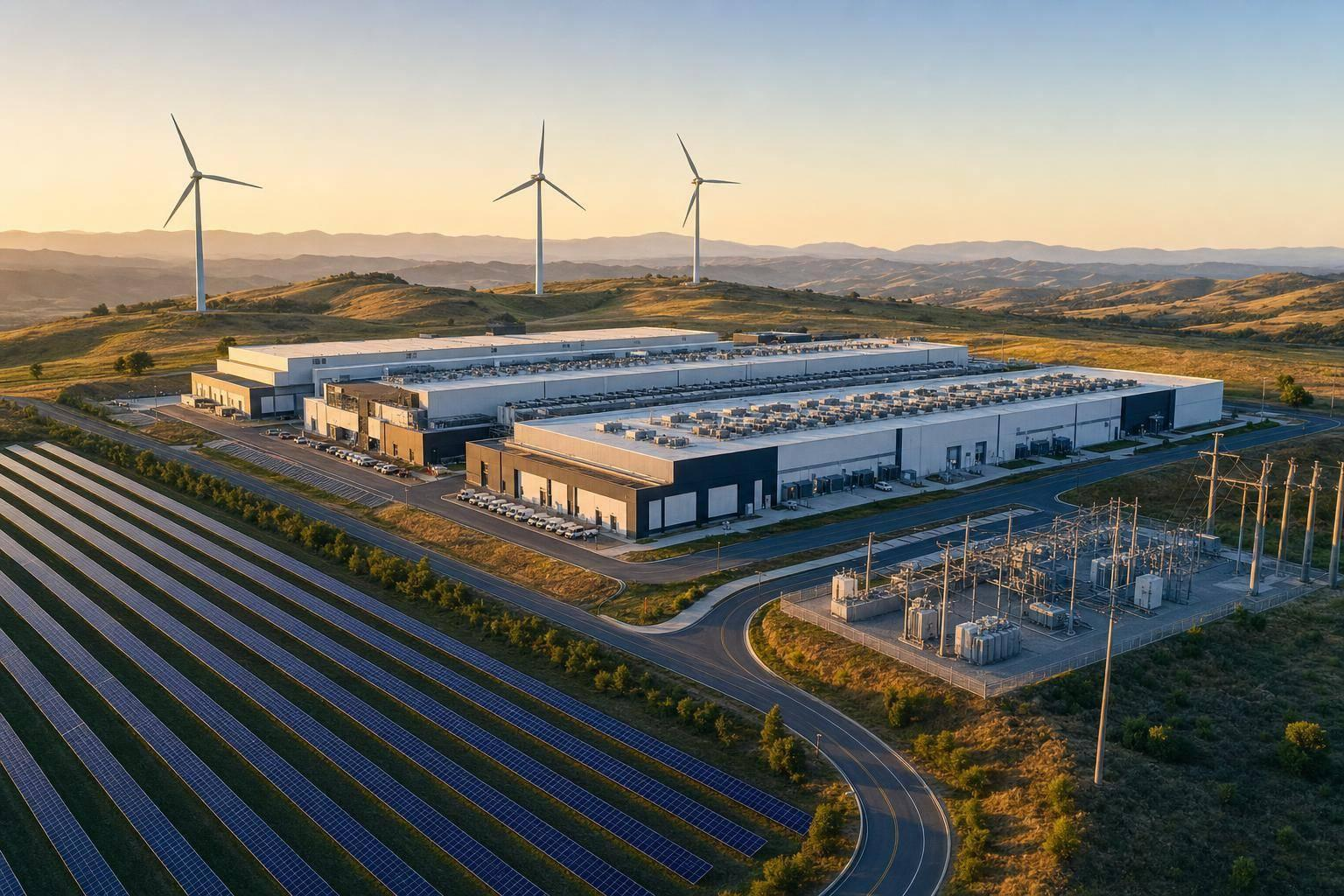
India can power its AI boom more sustainably, but not automatically. Data centres add steady, round-the-clock demand, so the answer depends on grid capacity, reliable clean power and efficient design. Renewable purchases alone do not match demand hour by hour.
Public discussion often treats AI growth as a technology story. Rising AI workloads, cloud adoption and digital infrastructure investment are now drawing attention to load growth, transmission capacity, backup power and renewable procurement, which makes data centre energy demand in India a planning question for utilities and investors alike.
This article explains how data centre electricity demand is measured, what it means for the grid and emissions, and how India could balance AI growth with reliability, affordability and decarbonisation.
Article Section
What Drives Data Centre Energy Demand?
A data centre turns electricity into computing. Most of it powers IT equipment such as servers, GPUs and networking gear. The rest runs cooling and power conversion, and almost all of it ends up as heat.
AI raises demand because GPU-based training and inference draw more power per rack than conventional computing, and AI services tend to run around the clock rather than in bursts.
Three measures are often confused. Installed capacity is the load a facility is built to support, usually in megawatts. Annual electricity consumption is the energy it actually uses over a year, in kilowatt-hours or terawatt-hours. Peak demand is the highest load at a single moment. Think of a car: engine size, yearly fuel use and top sprint are three different facts. Efficiency is tracked with Power Usage Effectiveness (PUE), which divides total facility energy by IT equipment energy.
Article Section
Data Centre Energy Demand in India: How It Meets the Grid
Why capacity, consumption and peak differ?
A large installed capacity does not mean the same amount of electricity is used, because utilisation changes as facilities fill up. Grids must be built for peak demand, while emissions follow total energy consumed. Quoting one figure as if it were another can mislead planners and the public.
Grid connection and reliability
Data centres need continuous supply, so connection capacity, transmission and substation readiness decide where and how fast they can be built. A site with land and permits but no grid connection cannot operate. Delays in connection or transmission can hold up a project even when power is available elsewhere on the grid, so location and timing matter as much as total supply.
Backup generation and storage
Diesel generators and batteries protect against outages. Generators add emissions and local air pollution when they run, so battery storage and better grid reliability can reduce dependence on diesel.
Credible clean-power matching
Annual matching means buying renewable energy equal to a year's use, through power purchase agreements or renewable energy certificates. Hourly or 24/7 matching asks whether clean power was available in each hour. Solar generates in the day while data centre load runs through the night, so storage, wind, hybrid projects or steady clean supply are needed to close the gap.
Efficiency and flexibility
Lower PUE and efficient chips cut the energy needed for the same work. Where workloads allow, such as some AI training, compute can be shifted to hours with surplus clean power.
What it means for emissions?
Operational emissions largely follow the carbon intensity of the grid supplying a facility, so the same data centre has different emissions on different grids.
Article Section
Questions to Ask About Data Centre Power
For policymakers and utilities
Plan transmission and connection capacity ahead of data centre clusters, and ask for installed capacity to be disclosed separately from actual consumption. This helps utilities size new capacity for the load that will actually arrive.
For developers and technology companies
Report PUE, power source and backup arrangements, and state whether clean-power claims are annual or hourly.
For investors and ESG teams
Ask for load forecasts, grid connection status and the basis of renewable claims before relying on sustainability targets.
Common mistake: treating certificates as 24/7 clean power
Renewable certificates or annual matching do not show that a facility runs on clean power in every hour. Check which claim is being made.
Article Section
Conclusion
AI growth turns data centres from a technology topic into an energy and grid planning topic. Sustainability depends on efficient design, grid readiness and credible clean power.
The test for any project is whether its power plan stays credible in the hours when solar is not generating.
Article Section
Frequently Asked Questions
How much electricity do data centres use in India?
It depends on installed capacity and how fully facilities are used, so figures should come from official government publications rather than a single estimate.
Why does AI require so much power?
GPU-based computing draws more power per rack than conventional servers, and AI services run continuously.
Can renewable energy power data centres 24/7?
Not on solar alone, because solar does not generate at night, so storage, wind or steady clean supply is needed alongside it.
Will data centres strain India's grid?
They can in locations where connection and transmission capacity is not planned ahead of demand.
What is the biggest source of data centre emissions, and how can India make AI infrastructure sustainable?
Electricity use is the largest source of operational emissions for most data centres, so efficient design and credible clean-power sourcing matter most.
Keep Reading
Related Blogs


Next Step
Ready to turn ESG complexity into strategic advantage?
Talk to ESG Astraa about disclosures, climate strategy, governance controls, and execution support for your team.