Renewable Energy for AI Data Centres
What Actually Counts as Clean Power?
Reading Time
5 min
Article Sections
6
Share Links
3
On This Page
Article Section
Introduction
Clean power for a data centre means electricity from renewable sources that can be traced to the power it actually uses, ideally in the same place and hour. Buying certificates or annual renewable volume is weaker evidence, and that difference decides whether a green claim holds up.
AI power demand is growing, and investors and customers are challenging broad renewable-energy claims and asking for stronger evidence. A data centre described as renewable-powered can mean very different things.
This article explains how onsite generation, power purchase agreements, green tariffs, certificates and 24/7 matching differ, and which checks to apply to any claim about renewable energy for AI data centres.
Article Section
Three Kinds of Clean-Power Claim
A clean-power claim usually falls into one of three types. A physical claim means renewable electricity was actually delivered to the facility. A contractual claim means a contract, such as a power purchase agreement (PPA), assigns a project's renewable output to the buyer. A market-based claim means the buyer holds renewable energy certificates (RECs) that were bought separately from the electricity.
These types matter because of how emissions are reported. The GHG Protocol Scope 2 Guidance allows two methods. Location-based reporting uses the average emissions of the local grid. Market-based reporting reflects the contracts and certificates a buyer holds. The two can give very different results for the same facility.
Two more terms help. Additionality means the buyer's purchase helps bring new renewable capacity into existence, rather than crediting a project that already existed. Matching period is the time window over which supply and consumption are compared, such as a year or an hour.
Article Section
Renewable Energy for AI Data Centres: How Each Route Works?
Onsite generation
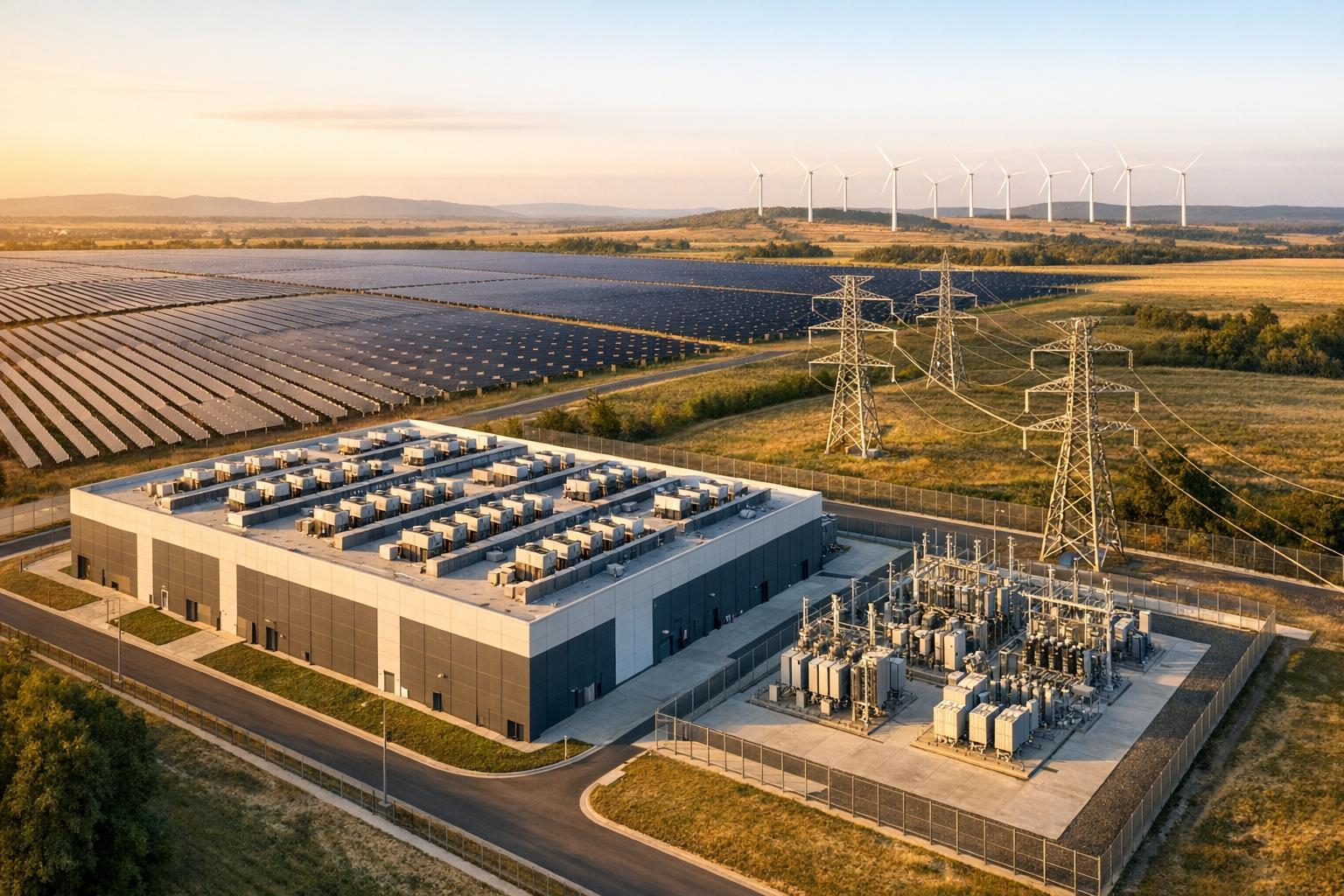
Rooftop or on-campus solar is physical and easy to verify. Space is the limit, because large AI loads need more power than most sites can generate themselves. It still helps as a supplement, because it lowers grid purchases even when it cannot cover the full load.
PPAs and open-access renewable power
Here the buyer contracts power from a renewable project and receives it through the grid, subject to approvals and charges. This route can be strong on additionality when the contract helps finance new capacity. Rules and charges differ by state, so each project needs checking locally.
Green tariffs
A utility offers renewable supply to customers as a product. It is simple to buy, but the buyer should ask what supply sits behind the tariff and how it is counted.
Renewable energy certificates
Each certificate represents renewable generation recorded in a registry. RECs support market-based reporting, but they do not show that the facility used that power or when. Certificates retired in the buyer's name and issued by a recognised registry give a stronger claim than unverified ones.
24/7 carbon-free energy
This means matching a facility's electricity use with clean supply in every hour. It is the strictest claim and the hardest to meet, because solar alone does not cover night hours. It needs wind, storage, hybrid projects or steady clean generation alongside solar.
A mixed grid and a clean claim
A data centre on a mixed grid can contract renewable supply and still claim clean power for the matched volume. In hours when the grid is fossil-heavy and no contracted supply is available, residual emissions remain and should be reported separately.
Article Section
Evidence Checklist for Clean-Power Claims
Certificates
Check that certificates are retired in the buyer's name and issued by a recognised registry, so the same renewable output is not claimed twice.
Matching period
Ask whether matching is annual, monthly or hourly, and which period the claim covers. Annual matching can hide hours when no clean power was used, while hourly matching shows them.
Project ownership and contract
Confirm who owns the project and whether a contract links its output to the buyer.
Additionality
Ask whether the purchase helped build new renewable capacity or only credited an existing project.
Grid delivery
Check that the power could physically reach the facility's grid region.
Residual emissions
Look for separate reporting of emissions in the hours not covered by clean supply.
Article Section
Conclusion
Renewable-powered is a starting point for questions, not proof. The strength of a claim depends on the evidence behind it.
Claims that state the route, matching period and residual emissions are the ones most likely to hold up under scrutiny.
Article Section
Frequently Asked Questions
What counts as renewable energy for a data centre, and can it use renewable energy when the grid is not renewable?
Power from renewable sources backed by traceable contracts or certificates counts, and a facility on a mixed grid can contract renewable supply, though the type of claim must be stated.
Are RECs enough to claim a data centre is green?
No, because RECs show renewable energy was generated, not that the facility ran on it at the time.
What is 24/7 carbon-free energy?
It means matching a facility's electricity use with clean supply in every hour rather than as an annual total.
How do data centre PPAs work in India?
A buyer contracts renewable output from a project and receives it through the grid under applicable approvals and charges, which vary by state.
What is additionality in renewable procurement?
It means the buyer's purchase helps bring new renewable capacity into existence.
Keep Reading
Related Blogs


Next Step
Ready to turn ESG complexity into strategic advantage?
Talk to ESG Astraa about disclosures, climate strategy, governance controls, and execution support for your team.