What Buyers Are Actually Checking For in ESG Due Diligence Today?
What today's ESG due diligence checklist actually looks for?

Reading Time
5 min
Article Sections
5
Share Links
3
On This Page
Article Section
The Regulatory Backdrop Behind the Checklist
CSDDD covers a company's own operations, its subsidiaries, and its upstream and downstream value chain partners, including suppliers and distributors. Its requirements phase in over the coming years for in-scope companies, defined by the 1,000-employee and €450 million turnover thresholds noted above.
Its enforcement runs on two tracks. Member States must establish a civil liability regime so that people harmed by a company's failure to prevent or mitigate human rights or environmental damage can claim compensation, with joint and several liability where a company and its subsidiary or business partner jointly caused the damage. Separately, administrative supervisory authorities can issue injunctive orders and impose fines, and CSDDD compliance can factor into eligibility for public contracts and concessions.
In the US, the SEC's March 2024 climate disclosure rule remains unenforced following the Commission's March 2025 decision to end its defense of it in ongoing litigation. California's Climate Corporate Data Accountability Act and Climate-Related Financial Risk Act continue to apply independently, requiring large companies doing business in the state to disclose emissions and climate-related financial risk. The result is a patchwork rather than a single standard, and it is this patchwork that buyers now have to check target by target.
Article Section
What Buyers Are Actually Checking For?
Whether the post-deal entity crosses CSDDD's scope thresholds
Buyers are checking employee headcount and worldwide turnover, not just for the target alone but for the combined group after the deal closes. A transaction that looks immaterial to CSDDD on a standalone basis can pull the acquirer's whole group over the 1,000-employee, €450 million turnover line once the two are combined, which changes the legal obligations both parties carry going forward.
Whether liability could transfer through the corporate structure
Because CSDDD applies joint and several liability where a parent company and a subsidiary or business partner jointly cause damage, buyers are checking whether folding the target into their group creates exposure to claims tied to the target's pre-acquisition conduct. This exposure does not reset at closing, so it is checked as a forward-looking liability question, not a historical one.
Whether the target's value chain documentation goes deep enough
CSDDD explicitly covers a company's upstream suppliers and downstream distribution partners, not just its own operations. Buyers are checking whether the target can produce due diligence records for its value chain, not only its own facilities, since gaps there translate directly into inherited exposure.
Whether disclosure obligations are consistent across the target's operating footprint
For targets with EU, US federal, and California exposure, buyers are checking which disclosure regime applies where, given that the federal US rule remains unenforced while California's laws continue to bind companies doing business in the state. A target compliant in one jurisdiction may still have gaps in another.
Article Section
What Sellers and Buyers Should Have Ready?
Sellers should pre-build a jurisdiction-by-jurisdiction compliance summary
Document which ESG disclosure and due diligence regimes apply to each part of the business before a buyer asks, covering EU, US federal, and relevant state-level obligations separately rather than as one combined statement.
Buyers should model post-deal CSDDD scope, not just the target's standalone position
Run the 1,000-employee and €450 million turnover thresholds against the combined post-deal entity, not the target in isolation, since scope can change once the transaction closes.
Both sides should extend diligence into the value chain
Request or prepare supplier and distribution-partner due diligence records ahead of time, since CSDDD liability can extend into the target's chain of activities, not just its own operations.
Legal and compliance functions should be involved from the start of diligence
Given the civil liability and public-contract eligibility stakes tied to CSDDD compliance, legal and compliance teams should review ESG findings alongside commercial terms, not after they are already set.
Article Section
Conclusion
What buyers are checking for in ESG due diligence today is specific and largely mechanical: scope thresholds, liability transfer, value chain documentation, and jurisdictional disclosure gaps. None of it requires guessing at sentiment or reputational risk; it requires reading the regulation and checking the target against it.
As CSDDD phases in and US disclosure rules continue to diverge by state, this checklist will only get more specific, not less. Sellers who can answer these questions before they are asked, and buyers who build the answers into how they price and structure a deal, are the ones best placed to avoid surprises after closing.
Article Section
Frequently Asked Questions
What are the CSDDD scope thresholds buyers check for?
More than 1,000 employees and worldwide turnover above €450 million, checked against the target and, after a deal, the combined post-acquisition entity.
Can ESG liability transfer to a buyer after an acquisition?
Yes; CSDDD applies joint and several liability where a parent company and a subsidiary or business partner jointly cause damage, so liability can transfer with the corporate structure.
Does ESG due diligence cover a target's suppliers, or just its own operations?
CSDDD covers a company's upstream suppliers and downstream distribution and production partners, so diligence extends into the value chain, not just the target's own facilities.
Is US climate disclosure the same in every state?
No; the federal SEC rule remains unenforced following litigation, while states such as California continue to enforce their own mandatory climate disclosure laws.
When should legal and compliance teams get involved in ESG due diligence?
From the start of diligence, given that CSDDD carries civil liability and public-contract eligibility consequences that affect deal terms.
Keep Reading
Related Blogs

All Industries
What Is a "Just Transition" ?
Why Is It Reshaping Global Energy Policy?
Read more
All Industries
What CSRD Actually Means for Indian Companies Supplying Europe
Understanding the value chain impact of CSRD.
Read more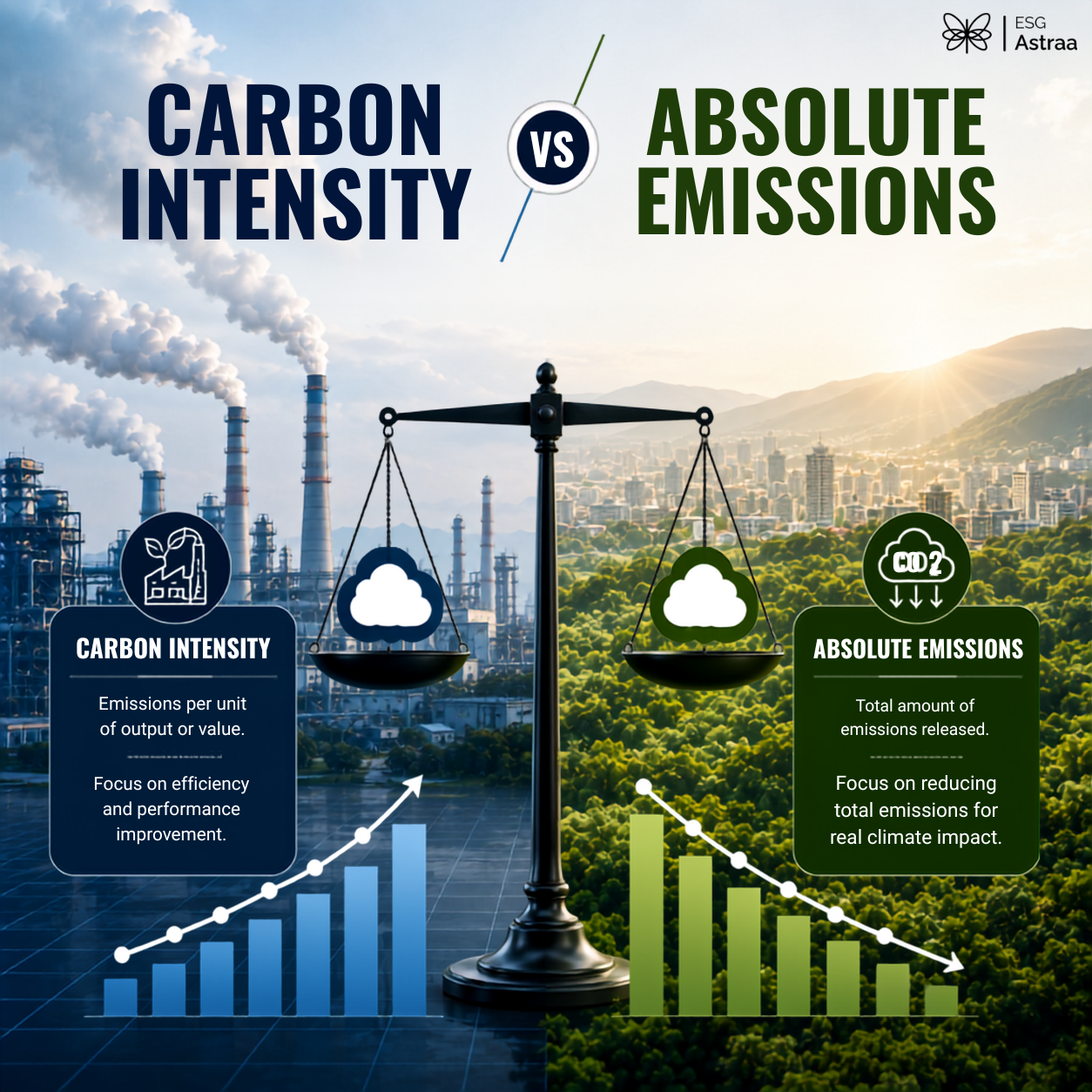
All Industries
Carbon Intensity vs Absolute Emissions
Why the Metric You Choose Changes Your ESG Story Completely?
Read moreNext Step
Ready to turn ESG complexity into strategic advantage?
Talk to ESG Astraa about disclosures, climate strategy, governance controls, and execution support for your team.